The Bees Knees
For years my photography consisted almost entirely of travel photos and landscapes. I enjoy traveling and being outdoors, so that always seemed like the natural fit. Then the pandemic hit.
Like a lot of people, the pandemic meant a drastic change in lifestyle. Working from home and canceled vacations led to the development of new hobbies. Watching documentaries was one of those. So, while working from home one day I had a documentary about honey bees on in the background. I love bees and have always said that when we bought a house out in the country I was getting bee hives. My husband, on the other hand, is terrified of bees. Any time he saw one he would run (not an exaggeration) in the other direction. For reasons I still do not understand, he was drawn to this documentary about bees.
Anyone who knows Matt knows that when he picks up a new interest he is all in. It will be the only thing he talks about, thinks about, read about, or researches for weeks (or sometimes months). This was the case with honey bees. We watched countless documentaries over the next few days, read numerous articles, and the next thing I know, we are talking about getting bees.
Fast forward a bit, and we now have bees. With our lack of travel, resulting in a lack of picture taking on my part, I started playing with the idea of photographing the bees. I had my camera out a few times over the summer with varying results, but it wasn't until winter (when bees cluster up and just try to stay warm) that I really started researching insect and macro photography. I purchased a macro lens to get the close-up shots, I purchased a new camera that had a faster shutter speed and more frames per second (this quickly became an expensive hobby...), and I started playing around with my new set up until the bees reemerged in the spring. (Did I need the new equipment? Probably not. Am I using the bees to justify these purchases? Maybe...)
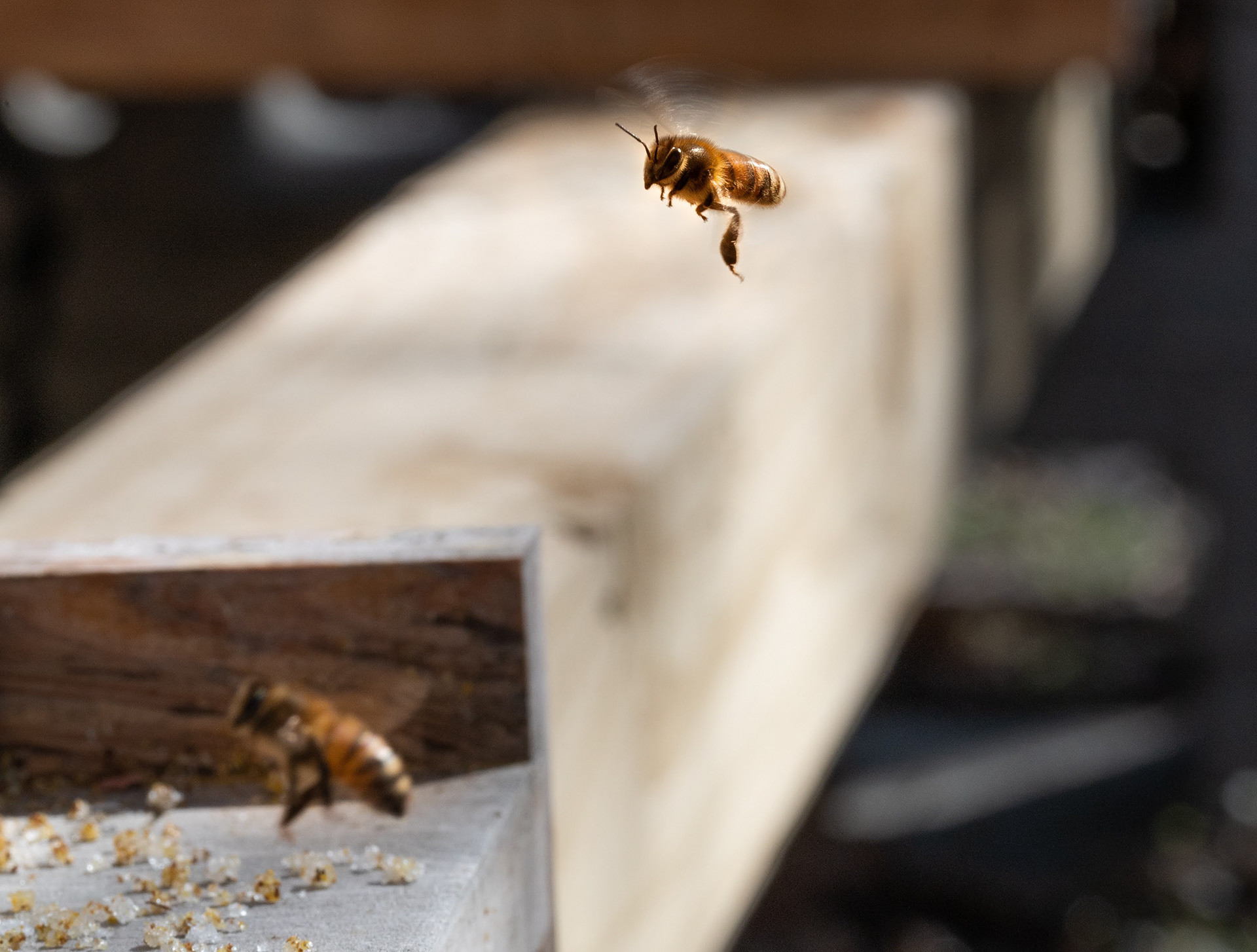
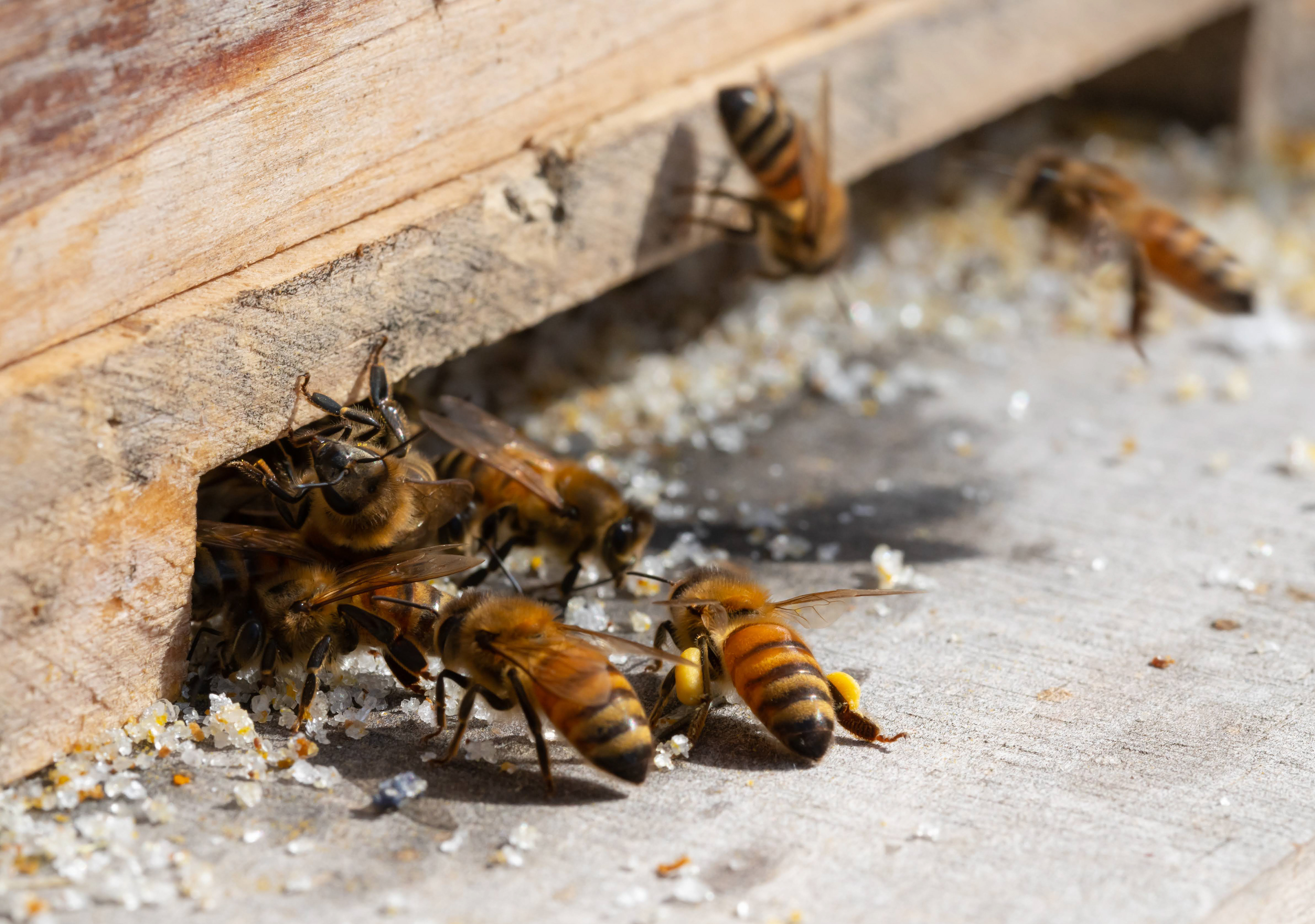
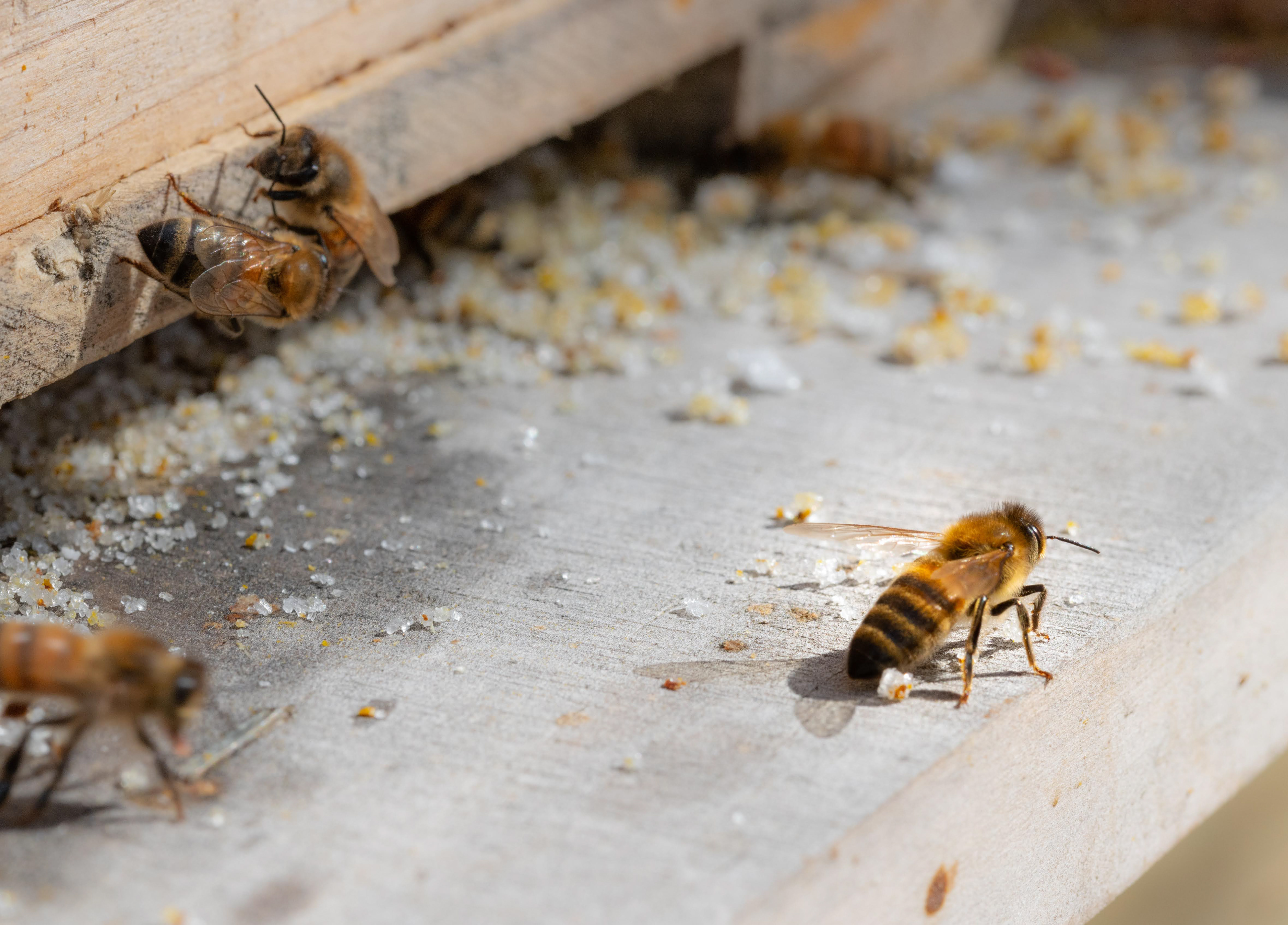
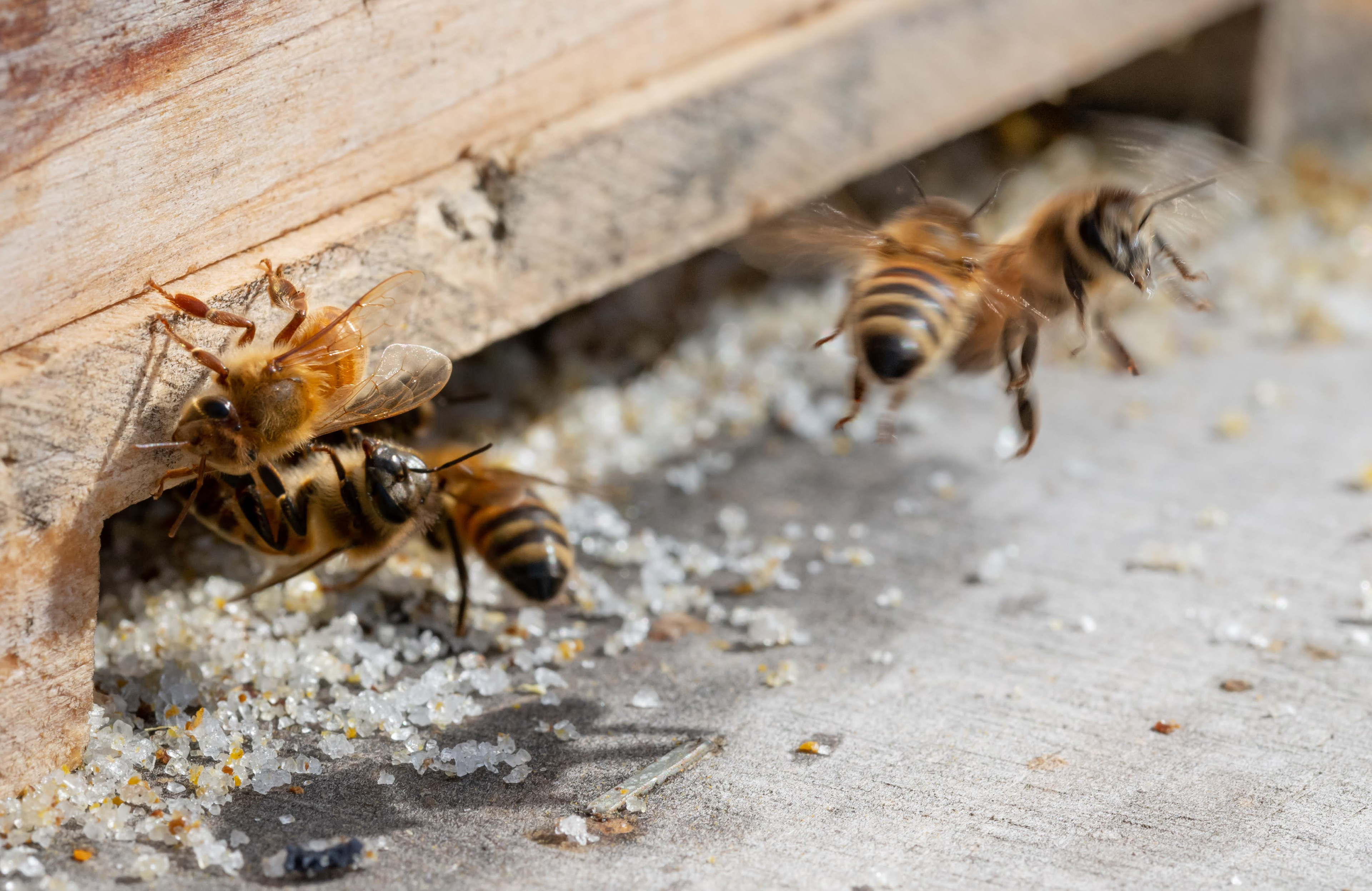
It's now mid March and the bees are back! So I grabbed my gear the other day and went out to the bee hives. It was a learning experience, to put it nicely. I set my camera up on a tripod right outside the bee hive, picked a focal point that bees seemed to be passing through, and held down the shutter button taking hundreds of pictures. In case you don't know, bees are fast. They move quickly through the frame and it is impossible to track them and try to get them in focus, so taking a bunch of images seemed like my best chance at getting them in focus.
Upon review of the images, I only have four that are really sharp and in focus. The rest either had bees out of focal range, too much motion blur, or no bees at all (this is how most of the frames turned out when I tried to catch them in flight). So while this wasn't a complete failure, I do have some improvements to make. To start, I need to use a faster shutter speed to freeze their motion better. I was shooting with the aperture stopped all the way down to give me the biggest depth of field and chance at catching a bee in the focal plane, I may be able to open it up a little, but I think my best bet will be it increase the ISO (I will have to play around with the tradeoff between more noise and a shallower depth of field to see what I am most comfortable with). I will definitely be back out there and will play around with the settings and set up some more. My goal is to get some good images not just of bees, but of the beekeeping process as well. We will see how it goes, but for now, it is something new and exciting.